
For a startup, branded merchandise should earn its place. It should help a new team feel connected, make an event more memorable, or give customers something useful enough to keep. Ordering products just because they can carry a logo usually leads to wasted budget and boxes of unused stock.
The better approach is to start with the moment the merchandise is meant to support. Is it for a launch, employee onboarding, investor meeting, exhibition, client gift or social campaign? Once that is clear, it becomes much easier to choose the right product and quantity.
Start small and choose products people will actually use
Most startups do not need a large merchandise range. Two or three useful products can make a stronger impression than ten low-value items.
A practical starter combination could be a branded T-shirt, reusable bottle and tote bag. For an office-focused team, a notebook and bottle may make more sense. The key is choosing items that fit the way your team or audience already works.
You can explore custom T-shirts and polos, bottles and mugs, or bags and backpacks as simple starting points.
Use merchandise to support a specific business goal
A launch event needs different merchandise from an employee welcome kit. At a launch, the product should be easy to carry and visually connected to the brand. For new employees, comfort and everyday usefulness matter more.
If the goal is customer retention, a more thoughtful gift may work better than a basic giveaway. If the goal is brand visibility at an exhibition, simple, practical items can be easier to distribute and more likely to travel home with visitors.
For event planning, our exhibition giveaways guide covers how to choose products people are more likely to keep.
Keep the branding simple
A startup logo does not need to cover the whole product. In many cases, a small chest logo, clean embroidery or one well-positioned print feels more polished.
Simple branding also makes merchandise easier to use outside a company event. A T-shirt or cap that looks wearable is more likely to stay in regular use, which gives the brand more natural visibility over time.
Choose the right T-shirt printing method
T-shirts are often one of the first branded products a startup considers because they can work for teams, launches and events. The printing method should match the artwork and quantity.
Screen printing can suit simple artwork and repeated larger runs, while DTF can be useful for colourful or detailed designs and smaller quantities. If you are deciding between the two, read our screen printing vs DTF guide.
Think about employee welcome kits
Merchandise can also support company culture. A simple onboarding kit with a notebook, bottle, bag and branded apparel can make a new employee feel prepared from day one.
The kit does not need to be expensive. It needs to be relevant to the job and easy to use. For more ideas, see our employee welcome kit guide for UAE companies.
Plan quantities carefully
Startups often grow quickly, which makes quantity planning tricky. Ordering too much ties up budget and storage space. Ordering too little can mean repeating setup and production more often than necessary.
A useful approach is to order based on a real near-term need, then keep a small buffer for new hires, replacements or upcoming events. For apparel, size mix matters just as much as total quantity.
Do not ignore packaging
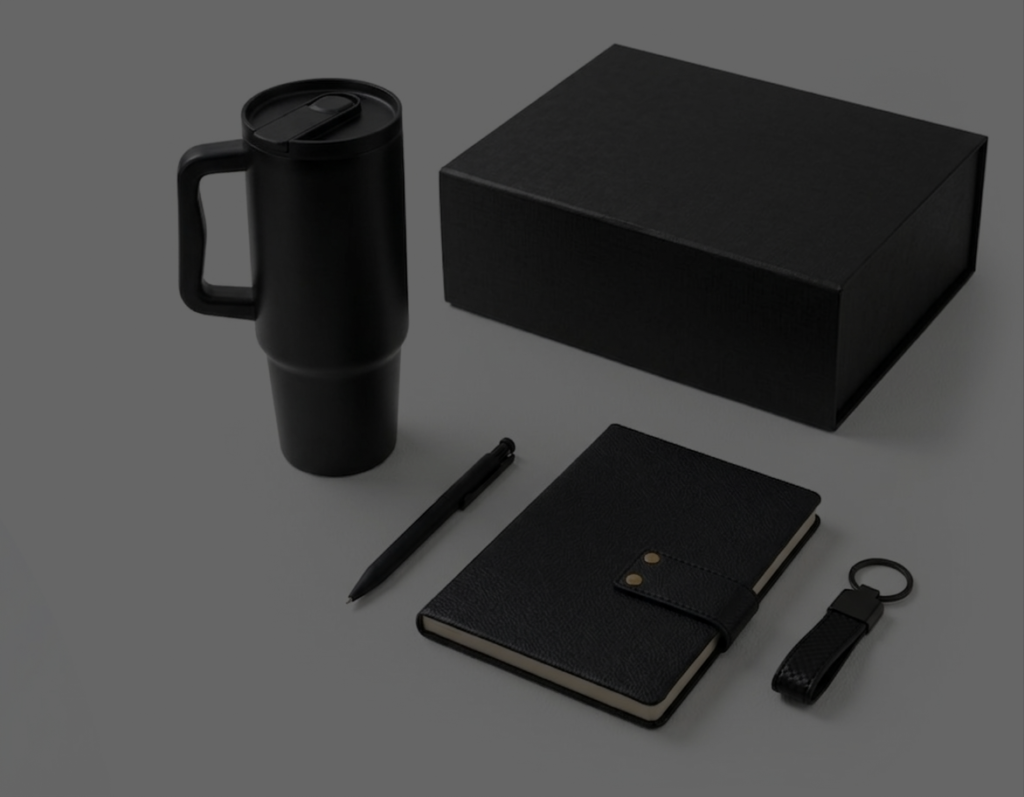
Packaging changes the way merchandise feels. A clean presentation can make a simple notebook or bottle feel more considered, especially for client gifts or investor meetings.
That does not always mean a rigid gift box. A branded tote, sleeve or simple card can create a polished experience without adding unnecessary cost.
Consider eco-friendly options where they make sense
Reusable bags, plantable stationery and practical drinkware can work well for startups that want a more thoughtful merchandise mix. The product should still be useful first; sustainability works best when it supports the item rather than becoming the only reason for choosing it.
Browse eco-friendly gifts if that fits your brand and audience.
Set a budget around the purpose
Do not start with the cheapest available item. Start with the goal, audience and quantity, then set a realistic budget per person or per event visitor.
A lower-cost product can be right for a large exhibition. A smaller number of better-presented products may make more sense for clients, partners or investors.
Building branded merchandise for your startup?
Send Markevens your approximate quantity, audience, preferred products and required date. We can help you compare practical options for launches, teams, events and client gifting without making the merchandise more complicated than it needs to be.